
Our investment philosophy
Request an introductory meeting
Investor onboarding and access
Event-Driven Credit is Ironshield Capital’s strategy focused on European corporate credit opportunities arising from identifiable corporate events, including mergers, restructurings, refinancings and transitions in ownership or governance.
Rigorous fundamental research underpins every position, with analysis centred on issuer-specific developments, capital structure dynamics and the careful assessment of downside risk against asymmetric return potential within each opportunity.


Analysis focuses on governance, capital structure dynamics and issuer fundamentals, with particular emphasis on clarity around downside risk and creditor positioning throughout each event cycle.
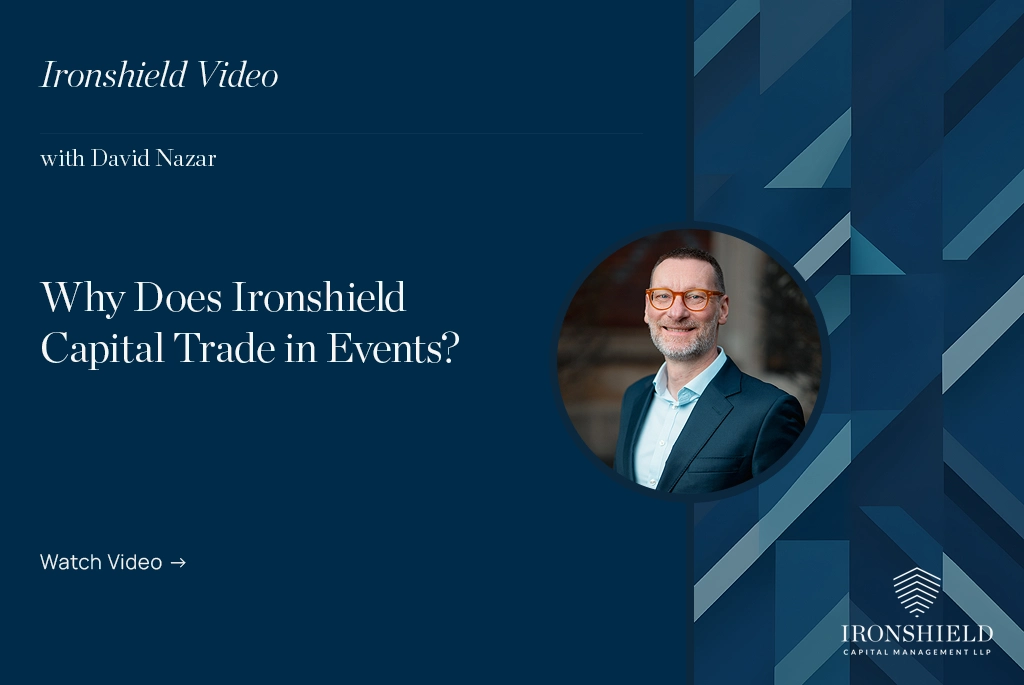
In this short video, David Nazar outlines the firm’s approach and explains how disciplined credit analysis informs event-driven decision-making.
Founder, Managing Partner & CIO
Event-Driven Credit combines structured corporate event analysis with detailed assessment of capital structures and issuer fundamentals across European credit markets. Each situation is evaluated to understand how defined events interact with credit risk, valuation and creditor positioning.
The process begins with identifying corporate events including mergers, acquisitions, refinancings and restructurings that may influence credit outcomes. Each situation is assessed for timing, structure and implications for creditors.
Event analysis is combined with capital structure assessment to identify where value and risk may emerge across instruments, with positioning reflecting issuer fundamentals, structural protections and event-specific outcomes.
Ironshield's credit strategies across European event-driven and corporate credit.
Research-led commentary on European corporate credit and event-driven markets.
Information covering Event-Driven Credit's structure, liquidity and regulatory framework.
We welcome the opportunity to speak with professional clients and eligible counterparties about Ironshield Capital, our investment strategies and our approach to European credit. Meetings can be arranged as a telephone call or Microsoft Teams conversation at a time that suits you.
Professional clients and eligible counterparties may contact us at info@ironshieldcapital.com
For further information on access and documentation, please refer to the Onboarding & Access page.
For interview requests and media enquiries, email Ironshield or call +44 (0)20 3882 4426
Event-Driven Credit is guided by structured analysis, consistent evaluation and disciplined judgement, underpinning a measured and transparent approach to European corporate credit across each stage of the investment process.
Clear governance and compliance frameworks support accountable decision-making and appropriate oversight across all event-driven credit activities.
Risk and sustainability factors are assessed alongside fundamental analysis to support responsible engagement with corporate events across European credit markets.
Ironshield Capital is a specialist European credit manager applying disciplined research and structured processes across strategies and mandates.
Request access to the Investor Data Room to review detailed strategy information, governance documentation and regulatory materials.
Event-driven credit demands precise analysis, independent judgement and the experience to navigate complexity under uncertainty. Ironshield brings a dedicated European credit focus and structured research process to each situation.

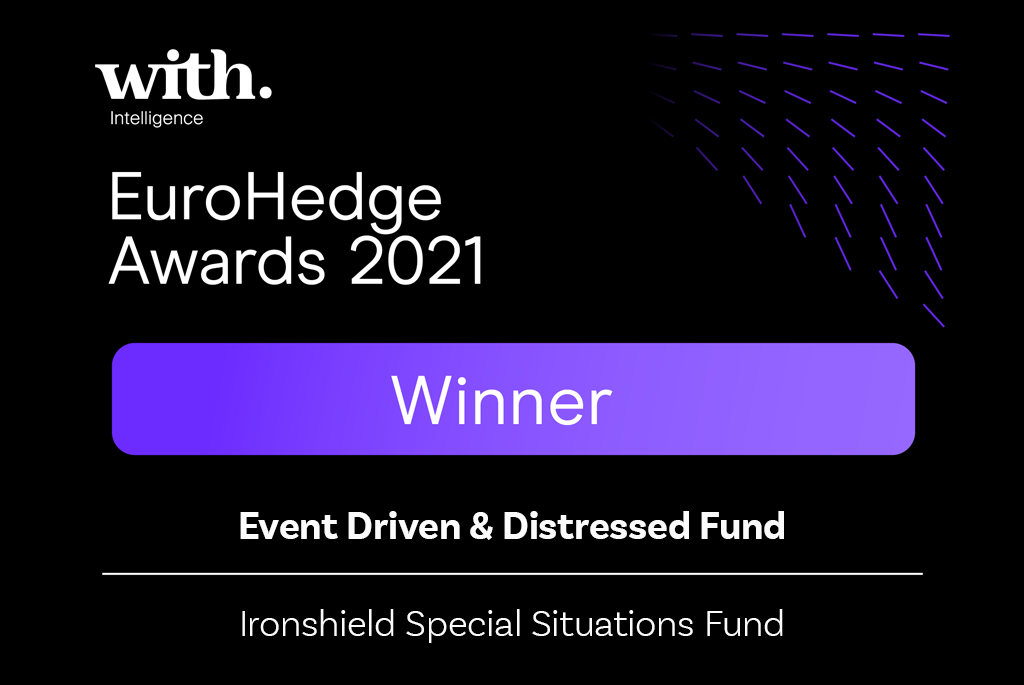

Event-Driven Credit (L1) is a European corporate credit strategy focused on situations where a defined corporate event may alter an issuer’s capital structure or risk profile.
The strategy typically considers mergers, acquisitions, refinancings, recapitalisations, restructurings, asset sales and similar transactions affecting creditor outcomes.
Investments generally include corporate bonds, loans and related credit instruments, with derivatives used for hedging or efficient portfolio management where appropriate.
L1 focuses on event-driven situations with relatively defined structures and timelines, whereas more complex strategies may involve higher restructuring or legal complexity.
Opportunities are identified through fundamental research, monitoring of corporate activity and analysis of transaction documentation and capital structures.