
Our investment philosophy
Request an introductory meeting
Investor onboarding and access
Ironshield Capital’s strategy focuses on identifying mispriced securities through bottom-up credit analysis, with returns driven by issuer-specific outcomes rather than broader market direction.
The approach emphasises disciplined security selection, capital structure expertise and controlled exposure management within a UCITS framework. We aim to price credits under multiple scenarios and act when market pricing diverges from our internal valuation.
Companies in the High Yield market range from very mature companies to fast growing ones which in turns dictates their need for capital. We believe that all these different and often competing forces will continue to present us with attractive investment opportunities in all market environments.


Analysis begins with identifying key risks and forming an initial view through engagement with market participants. Opportunities are underwritten through audited cash flow analysis and scenario-based valuation, with positioning driven by differences between market pricing and internal assessment. All investments are subject to investment committee review and ongoing re-evaluation as new information emerges.
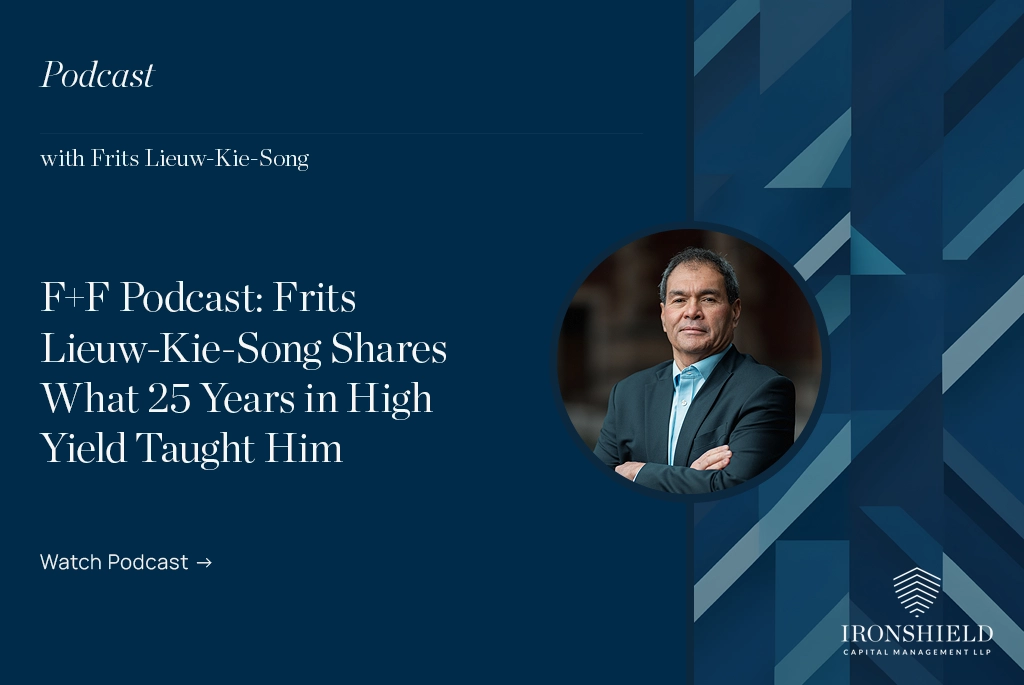
In this short video, Frits Lieuw-Kie-Song outlines the firm’s approach and explains how disciplined credit analysis informs portfolio decision-making.
Portfolio Manager
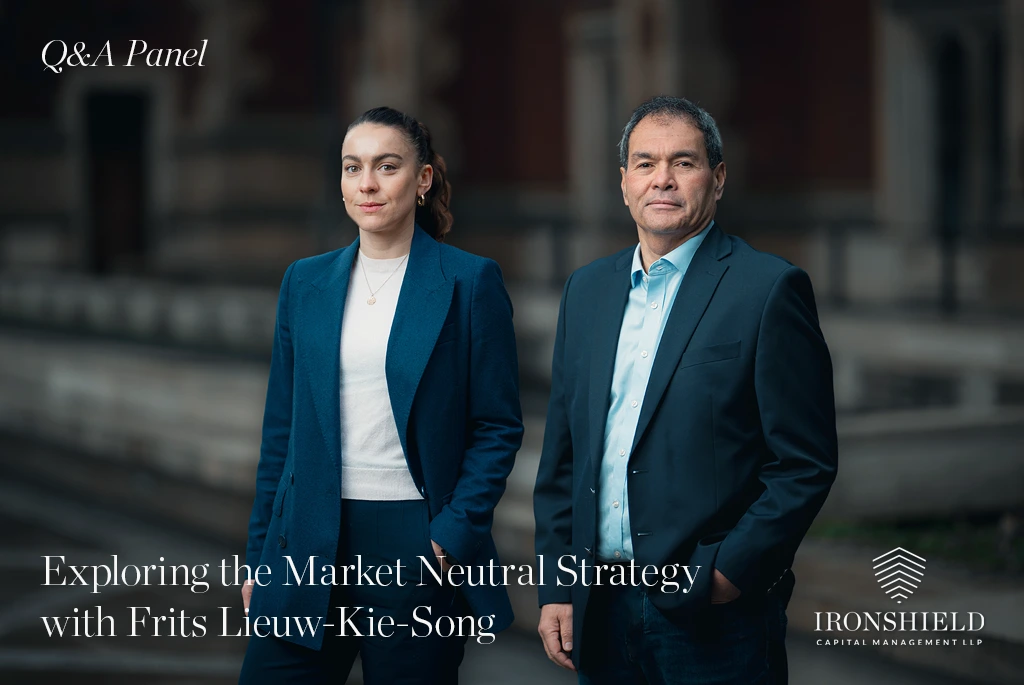
We combine disciplined credit research with a market neutral structure within a regulated UCITS framework. The strategy uses long and short positions to target relative value opportunities, with investment decisions driven by bottom-up analysis and internal valuation.
The portfolio combines long positions in mispriced credits with short exposure through bonds, CDS and indices to manage overall market risk. Positioning is based on relative value and scenario analysis, with returns driven by issuer-specific outcomes rather than broader market direction.
The strategy operates within a regulated UCITS structure, providing transparency, oversight and defined risk controls. All investments follow a structured process, including investment committee approval and ongoing re-underwriting as new information or market conditions evolve.
Overview of all Ironshield Capital investment strategies across European credit.
Research-led commentary on European high yield and relative value credit markets.
Information covering High Yield Alpha’s structure, liquidity and regulatory framework.
We welcome the opportunity to speak with professional clients and eligible counterparties about Ironshield Capital, our investment strategies and our approach to European credit. Meetings can be arranged as a telephone call or Microsoft Teams conversation at a time that suits you.
Professional clients and eligible counterparties may contact us at info@ironshieldcapital.com
For further information on access and documentation, please refer to the Onboarding & Access page.
For interview requests and media enquiries, email Ironshield or call +44 (0)20 3882 4426
Our market neutral strategy is grounded in disciplined credit analysis, structured decision-making and a consistent approach to pricing risk. These principles underpin a research-led process focused on identifying relative value opportunities while maintaining strict oversight and risk control within a regulated framework.
A structured investment process, including investment committee oversight, ensures all positions are rigorously challenged, priced and monitored throughout their lifecycle.
Risk is assessed at the outset through scenario analysis and continuously re-evaluated as market conditions and issuer fundamentals evolve.
Ironshield Capital is a specialist European credit manager applying structured research and disciplined processes across its strategies and advisory mandates.
Request access to the Investor Data Room to review detailed strategy information, governance documentation and regulatory materials.
Disciplined credit investing requires structural rigour, experienced oversight and consistent implementation across market cycles. Market-neutral high yield strategies rely on fundamental research, capital structure expertise and embedded risk control.
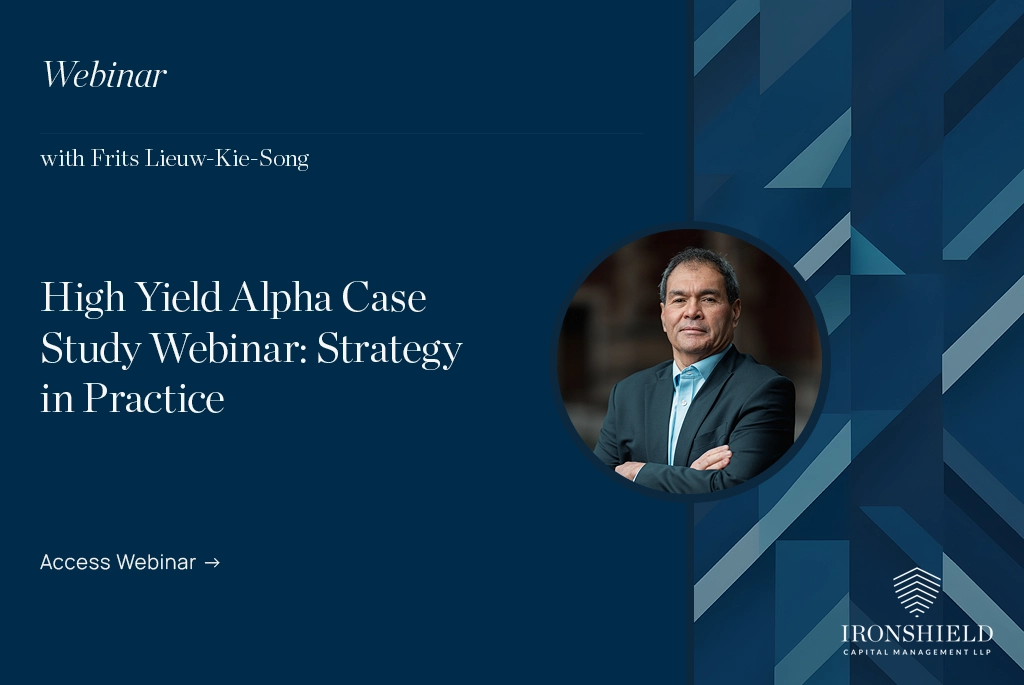
The strategy focuses on sub-investment grade credit, primarily in Europe and the US, where pricing inefficiencies tend to be more pronounced.
Typical opportunities include:
Companies undergoing change or disruption (e.g. restructuring, regulatory shifts)
Situations with misaligned investor expectations
Credits with strong downside protection relative to price
Smaller or less-followed capital structures where competition is lower
The investment team combines external sourcing (broker networks, advisors) with internal research and proprietary screening tools to identify opportunities.
A market neutral strategy seeks to reduce sensitivity to broader market movements by combining long and short positions.
In our approach, we invest in high yield bonds and loans we believe are undervalued, while taking offsetting short positions such as credit default swaps, indices, or equities on securities we believe are overvalued. This aims to limit the impact of general market direction, with returns primarily driven by individual security selection rather than overall market trends.
The strategy primarily invests in corporate bonds and loans (long positions). Credit default swaps (CDS) and short bonds (for relative value and hedging). Equity indices and options (to manage downside risk and tail events). This combination allows the portfolio to express both positive and negative views across capital structures while managing overall portfolio risk.
Returns are driven by identifying mispriced securities through fundamental credit analysis. This includes a detailed assessment of cash flows, capital structures, and industry dynamics, combined with scenario analysis and disciplined pricing. Opportunities often arise from market dislocations, corporate events, or structural inefficiencies where pricing does not fully reflect underlying fundamentals.
Risk management is integrated throughout the investment process and portfolio construction.
Key elements include:
Diversification across issuers and sectors
Position sizing limits (e.g. typically capped per issuer)
Scenario analysis and downside assessment before investment
Active hedging through short positions and index protection
Ongoing monitoring of company fundamentals and market conditions
In addition, independent oversight and regulatory frameworks (e.g. UCITS where applicable) provide further controls on exposure and liquidity.